You may have seen the signs: small puncture marks on fruit skin, rot spreading from the inside, or larvae moving through the flesh when fruit is cut open. The real cost is not only lost fruit, but the risk of rejected export consignments.
Ceratitis fruit flies are a serious phytosanitary threat. Import markets, especially in Europe, have strict zero-tolerance rules for fruit fly infestation. A single positive find can result in an entire shipment being rejected.
Know your pest: The three Ceratitis species
There are three Ceratitis species you need to watch for in Zimbabwe:
- Mediterranean fruit fly (Ceratitis capitata) is the most widespread of the three and can be found throughout the year. It attacks citrus, deciduous fruit, and many subtropical crops.
- Natal fruit fly (C. rosa) is most active during the wet summer months and is common in Zimbabwe and northward into East Africa.
- Marula fruit fly (C. cosyra) is a subtropical species that targets mango and guava in particular.
How to tell them apart
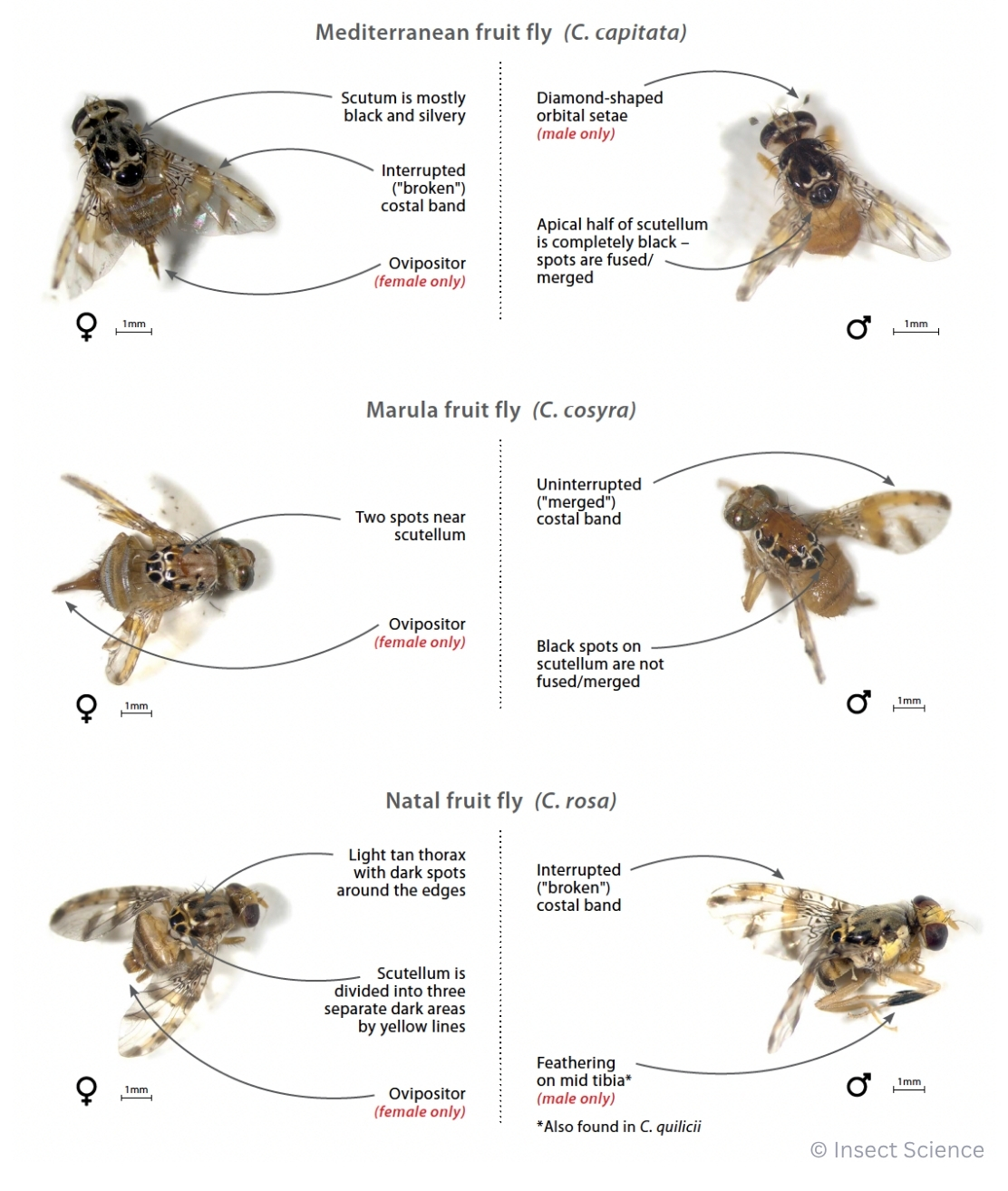
All three look similar at a glance, but there are key differences. Medfly has a mostly black and silvery upper thorax, with the apical half of its scutellum completely black. Natal fruit fly has a light tan thorax with dark spots at the edges, and the scutellum is divided into three dark areas by yellow lines. Marula fruit fly has two distinct spots near the scutellum that are not fused, and an uninterrupted costal wing band.
The life cycle: why early action matters
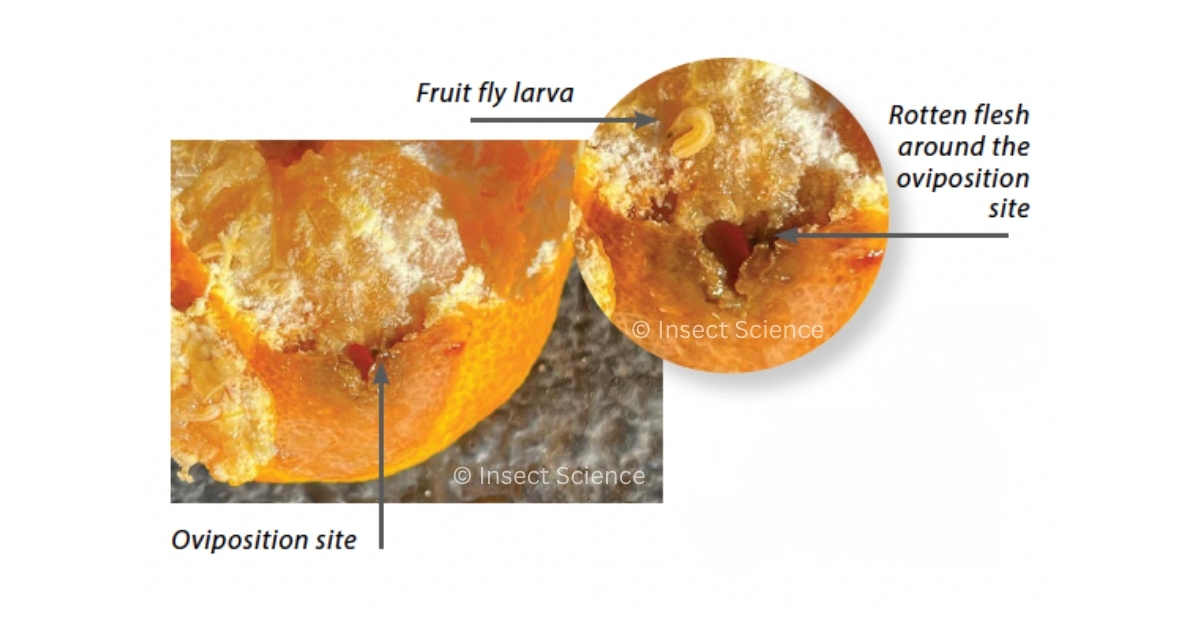
The female fly stings the fruit skin with her ovipositor and lays eggs just below the surface. Eggs hatch in about two days. The larvae feed in the fruit flesh for roughly six days, causing internal rot. They then drop to the soil and pupate, emerging as adults about nine and a half days later.
The full egg-to-egg cycle takes around 22 days at 26°C, and there can be up to 15 generations per season.
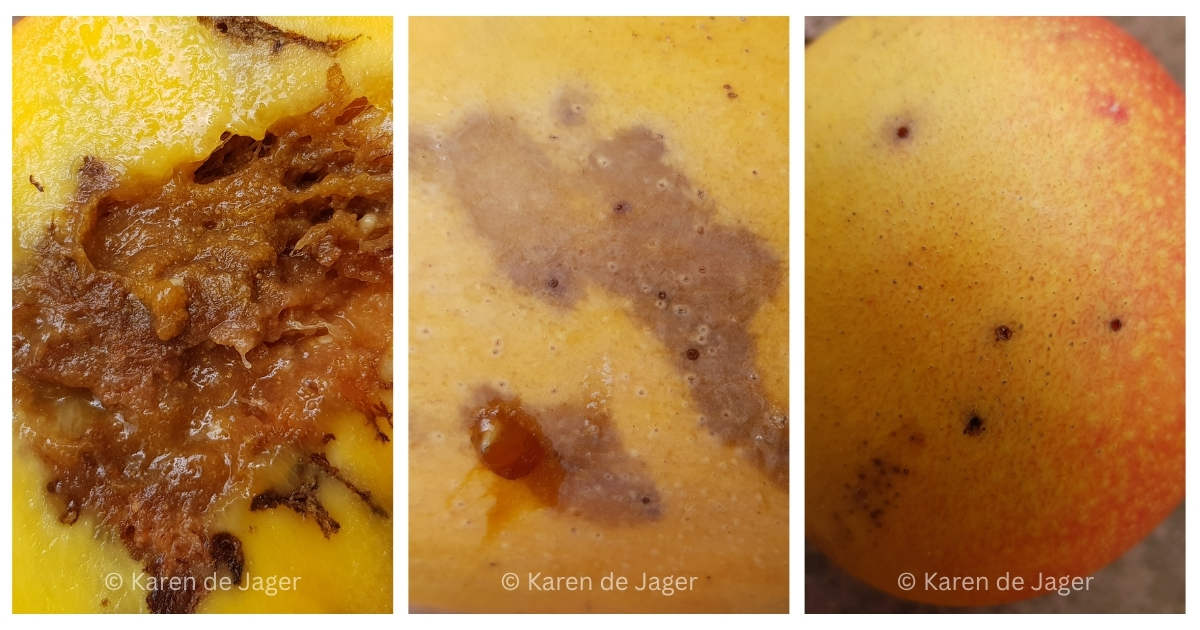
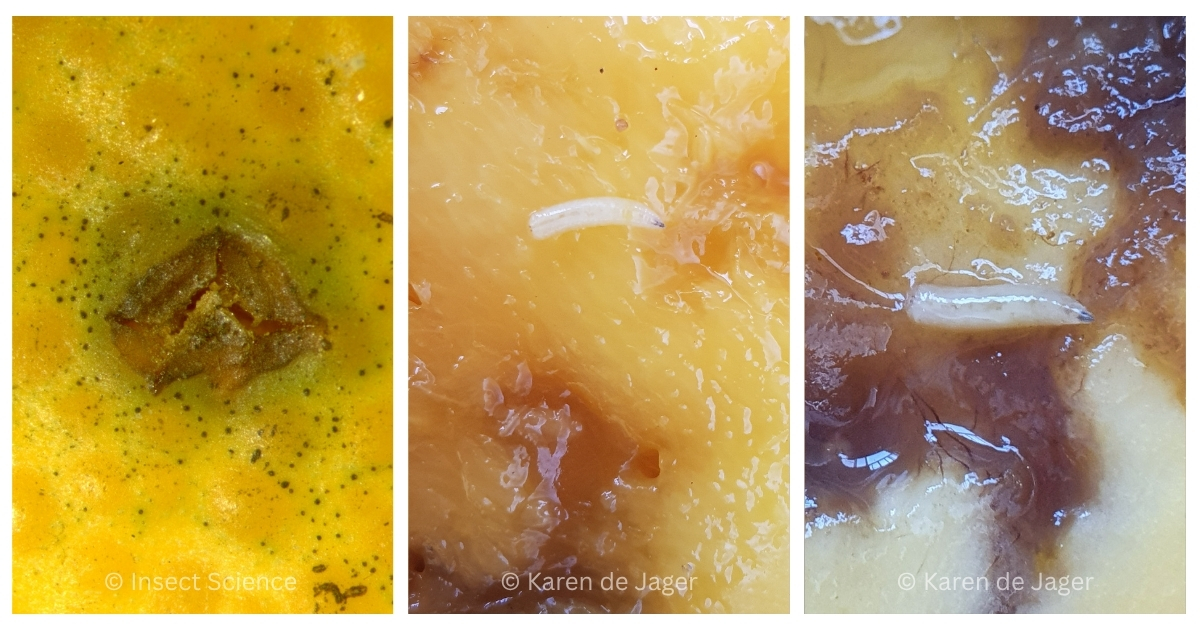
What to look for: small puncture marks or "stings" on the fruit skin, light discolouration spreading from the puncture site, soft or rotting flesh, larvae visible inside when cut open, and premature fruit drop.
Two products that work
Insect Science's two control products serve different situations. For most growers, AK F.F. is the first recommendation. Its dual-action formula attracts both males and females, and one deployment lasts 16 to 18 weeks. For a shorter season or more targeted intervention, Last Call™ F.F. is applied monthly for flexible control of male populations.
Last Call™ F.F. - targets the males
Last Call™ F.F. is an attract-and-kill grease formulation that uses enriched ginger oil to lure male Ceratitis flies. When males contact the droplets, a lethal dose of insecticide kills them within minutes.
Why target males? Male fruit flies must gather in small groups before they can attract females to mate. No live males mean no mating, fewer eggs, and a rapidly declining population.
Key benefits: pest-specific action, very low impact on beneficial insects, no spray drift, no pre-harvest interval, no re-entry period, rainfast performance, and up to 28 days of activity per application.
Last Call™ F.F. is registered in Zimbabwe under registration number 22-D-112-33.
AK F.F. - targets both males and females
AK F.F. is a ready-to-deploy yellow bait device that combines two attractants: a protein hydrolysate that draws in female flies, and a plant extract that attracts males, together with a contact insecticide.
Key benefits: no mixing, ready to hang straight out of the box, targets both sexes, supports IPM programmes, and helps reduce overall pressure on the crop.
AK F.F. is registered in Zimbabwe under registration number 22-AT-13-1.
Monitoring and trap maintenance
Knowing when and where populations are rising is essential. Use a yellow McPhail trap together with an E.G.O. PheroLure® and an insecticide block to track male fly numbers throughout the season.
- One trap monitors approximately 5 hectares.
- Check and record catches every week, on the same day.
- Hang traps at 1.5-1.8 m above the ground, keeping entrances clear of leaves and branches.
- Replace the PheroLure® every 20 weeks and insecticide blocks every six weeks.
- Start trapping at the beginning of the production season, before fruit fly pressure builds.
Are you ready to protect your crop?
To order Last Call™ F.F. or AK F.F., contact Hybrid Agri, your local supplier for these registered products in Zimbabwe.
Contact Hybrid Agri